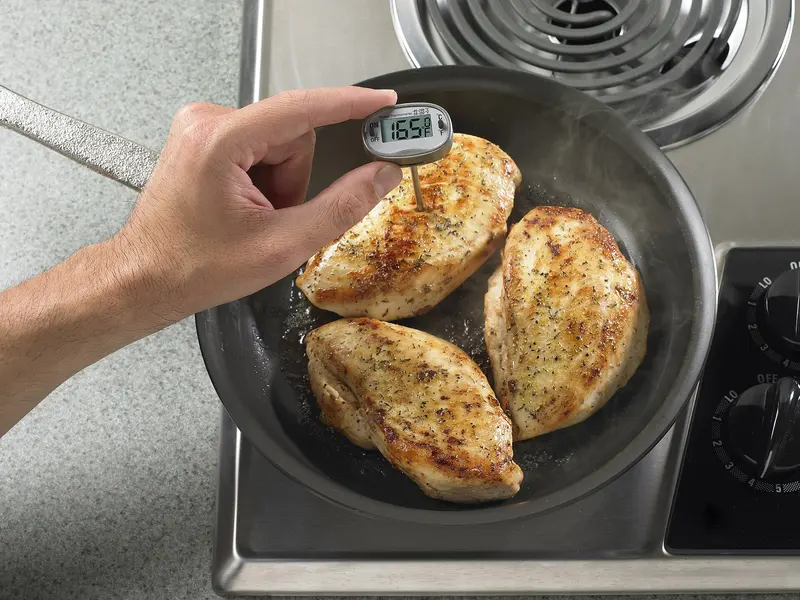
For many food businesses December is the busiest month of the year: more covers, seasonal menus, temporary staff and suppliers working flat out. It's also when a food safety system shows whether it works on a bad day. This article looks at the legal baseline and at ISO 22000, the international food safety management standard — and what training is available.
This is general information. For your own premises, your local authority's food safety team and the Food Standards Agency's guidance are the places to go.
The baseline: a system based on HACCP
GOV.UK's guidance on food safety management systems is direct: "Your food safety management system must meet the Hazard Analysis and Critical Control Point (HACCP) principles." In practice that means:
- identifying the food hazards in what you do
- identifying the critical control points — the steps where a hazard has to be controlled
- setting limits at those points
- monitoring them
- putting things right when a control point has a problem
- checking that the system is working
GOV.UK also says businesses should keep records of their food safety systems, checks and how they've put things right — and that they will need to show these records if they're involved in a food safety incident. It notes there are different rules for HACCP in meat plants.
Christmas pressure points
Seasonal changes are exactly the kind of thing a HACCP-based system has to absorb:
- New dishes and new suppliers. A festive menu brings new ingredients and new steps; the hazard analysis should cover them before the first service, not after.
- New and temporary staff. People need to know the monitoring checks and what to do when a limit is missed.
- Volume. Larger batches and more covers stretch cooling, hot-holding and storage. The records you keep in December are the ones you'll be glad of in January.
ISO 22000: a management system around HACCP
iso.org describes ISO 22000 as specifying requirements for a food safety management system that "integrates the principles of the Hazard Analysis and Critical Control Point (HACCP) system" developed by the Codex Alimentarius Commission. It adds the management-system elements — interactive communication along the food chain, system management and prerequisite programmes — and applies to any organisation in the food chain, from producers and packaging makers to retail and catering.
So HACCP is the core; ISO 22000 is a full management system built around it, and it is certifiable.
A revision is under way
The current edition is ISO 22000:2018. On iso.org it is now marked "to be revised" (stage 90.92), with a new version at draft international standard (DIS) stage, and the page says it is expected to be replaced "within the coming months". If you're booking a course for 2027, ask the provider which edition it teaches and whether a transition course will follow. Our ISO 22000 page tracks the edition.
Before you book a food safety course
A few questions worth asking the provider:
- Which edition does the course teach — ISO 22000:2018, or the new edition once it is published?
- Is the certificate from the provider itself or certified by a scheme?
- Does the course assume you already know HACCP, or teach it from the start?
- Is the assessment an exam, coursework or continuous assessment?
Our pre-course checklist has more general questions to ask.
Training for ISO 22000
The ISO 22000 qualifications we list:
- ISO 22000 Foundation / requirements 1 UK course
- ISO 22000 Internal auditor 4 UK courses
- ISO 22000 Lead auditor 2 UK courses
UK courses currently listed (each provider's own course name, scheme and stated duration):
| Course (as named by the provider) | Provider | Level | Certified by | Duration | Link |
|---|---|---|---|---|---|
| Internal Auditor Training Course - ISO 22000Live online; In-house | BSI | Internal auditor | Not stated | 2 days | Course pagechecked 3 October 2026 |
| ISO/FSSC 22000 Internal Auditor | LRQA | Internal auditor | Not stated | 2 days plus pre-course eLearning | Course pagechecked 3 October 2026 |
| ISO/FSSC 22000 Auditor/Lead Auditor | LRQA | Lead auditor | CQI and IRCA certified (as listed by LRQA) | Includes pre-course eLearning — see page | Course pagechecked 3 October 2026 |
| Internal Auditor Training (Food Safety)Virtual – tutor led | NQA | Internal auditor | Not stated | 2 days | Course pagechecked 3 October 2026 |
| ISO 22000:2018 Lead Auditor TrainingVirtual – tutor led | NQA | Lead auditor | Not stated | 5 days | Course pagechecked 3 October 2026 |
| Understanding ISO 22000 Food Safety Management Training Course | Bywater | Foundation / requirements | Not stated | 1 day | Course pagechecked 3 October 2026 |
| ISO 22000 Internal Auditor Training Course | Bywater | Internal auditor | Not stated | 2 days | Course pagechecked 3 October 2026 |
Internal auditor training is often the practical choice for people already running a HACCP-based system who want to check it properly; lead auditor courses are for those who will lead audits, including second- and third-party audits.